
Most BIOplastics products are offered in a wide range of colors. While black and white are solid non transparent colors all other colors are offered as “transparent” ones. Color products can be helpful to distinguish different applications or users in the laboratory. Colored products are manufactured by adding trace amounts of dye into the raw polypropylene blend.
The incorporated dye does not interfere your reaction parameters. qPCR signal to noise ratio’s are substantially increased by using “white” vessels. Dye’s other than white may, in combination with organic solutions, “diffuse” into the organic solution.
If using organic solutions while processing reactions we recommend using natural or white color to prevent possible interference of dyes.
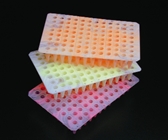
Some BIOplastics products are offered as swirling colors. Swirling colors are manufactured and collected while changing the injection moulding machine set-up from one color to an other color. It results in the same product qualification but in a variety of slightly changing colors. It looks like swirling undefined from one color to another.
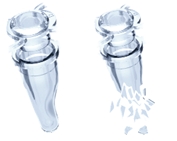
The careful selection of different types of polypropylenes combined with extreme uniform wall thickness benefits BIOplastics products in a way that they are not easy to crack. BIOplastics products can therefore withstand mechanical pressure avoiding possible small, microscopic hairline cracks, not visible with the bare eye. So unlike most suppliers BIOplastics EU products are strong and flexible! No cracking and easy handling!
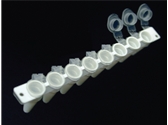
qPCR signal/noise ratios can be significantly increased by using frosted qPCR tubes, strips and plates. Frosted products will generate higher signal/noise ratios (up to 40%) compared to transparent ones.
By using frosted products both content viewability and high signal to noise ratio are achieved. White products are superior for enhancing signal/noise ratios. White products greatly enhance signal/noise ratios (up to 90%) compared to transparent ones and up to 50% compared to frosted products. Possible block pollution of dyes, differences in coatings, and inconsistent coatings can influence qPCR signals. White products will eliminate these influences while frosted products will reduce the inconsistencies when compared to natural transparent products.
Micro-particles, by nature, increase signal to noise ratios in Real-Time PCR applications. BIOplastics BPLPM technology incorporates micro-particles that increase signal to noise ratios in Real-Time PCR applications.
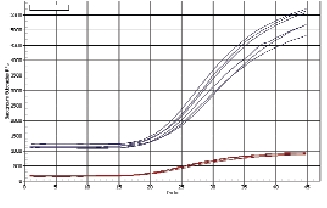

BIOplastics BV has set the EU Gold Standard for (q)PCR by being in control of all variablesin the process starting from the principle design up to the final packaging, with products of Superior Performance relative to signal, closure, evaporation, and reproducibility.
BIOplastics pipette tips are designed for use in molecular biological applications and more specifically for pipetting DNA, RNA, proteins and solutions commonly used in and around the (q)PCR process. BIOplastics has optimized its pipette and filter tips by means of design and raw material selection to meet highest requirements. By selecting medical grade materials with anti–static properties BIOplastics has reduced the biological molecule binding to the lowest possible. BIOplastics pipette tips become favorable when pipetting slightly basic buffers, salt solutions and biological molecules (Proteins, DNA, RNA). Differences in hydrophobic and hydrophilic properties of solutions, raw material surface and biomolecules are causing this pipetting difference “phenomenon” as shown below. If pipetting water contact us for regular “old type” tips.
| Volume recovery water | 99.8% | 97% | 98% |
| Volume recovery salt/buffer (pH 7.5 - 9.5) | 96% | 98% | 97% |
| Volume recovery organic solutions | 96% | 97% | 97% |
| Binding to bio-molecules (24 hrs incubation) | 0.5% - 1% | <0.2% | <0.15% |
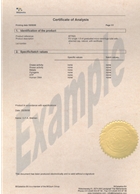
Product purity is, along with excellent design and functionality of products, an important and solid foundation that enables customers to generate reliable, reproducible and trustworthy results. BIOplastics products are fully traceable and frequently tested during production.
BIOplastics products comply with the highest standards and requirements. Polypropylenes are medical grade and fully incoming quality controlled prior to use in our proprietary blending methodology. All injection moulding process parameters, QC tests and packaging are monitored, logged and fully traceable.
If required, BIOplastics will provide batch certificates as well as individual certificates.
All BIOplastics products are autoclavable except the easy closure screw caps.
Autoclaving instructions: 15 minutes at 121°C and 2 bar pressure. Many confuse sterile products with DNa(se), RNa(se), Protein and DNA free products. BIOplastics (q)PCR products are manufactured free of any detectable levels of DNa(se), RNa(se), proteins and DNA. So the products do NOT REQUIRE any additional treatment. The AUTOCLAVING process DOES NOT REMOVE any DNA, RNA or proteins. It does however breakdown larger molecules and “kill” living organisms. So for BIOplastics products in general: use them as they come!

A sterile product is a product which is free of any living micro-organisms. Sterilization of BIOplastics products is accomplished by means of 60Co irradiation. Irradiated products age faster than non-irradiated products, they are less flexible and break more easily, because 60Co irradiation slightly changes the characteristics of the polymer material. Autoclaving the product yourself is a more gentle process, but when done several times it will also harden the polymer. One could argue whether it is necessary to autoclave or irradiate BIOplastics (q)PCR disposables at all since our products are produced under clean room and “no-hands-on” conditions. See also autoclave when, how and why. (above)

Producing products under strict clean room and “no-hands-on” conditions ensures the absence of DNA, RNA, and their breakdown enzymes. A sterile product is not necessarily DNA(se), RNA(se) and pyrogen-free. Only regular testing during and after the production process guarantees a DNA(se), RNA(se) and pyrogen-free product. You can recognize the DNA(se), RNA(se) and pyrogen-free plastics in this catalog when you see the “thumbs-up” icon.
Manufacturing products under strict clean and “no hands-on” conditions, as well as regular testing during and after the production process, ensures the absence of human DNA and ATP.
The absence of metals in polymer products like tips and tubes is essential for laboratory use as metals can interfere in (q)PCR and other reactions like ions as Mg2+. BIOplastics tips and tubes are made of PP (Polypropylene) of the highest medical grade quality available and guaranteed metal free.