In the design and development stage BIOplastics pays considerable attention to a strategy that provides maximum mould and manufacturing accuracy. We outline precise product specifications, minimize mould cavities and define product thresholds, resulting in superior and reproducible products with, in the case of (q)PCR vessels, an average wall thickness of 0.30 mm for tubes and strips and 0.35 mm for plates both with a maximum tolerance of 0.05 mm.
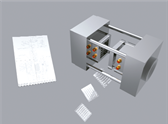
To manufacture tips, tubes or plates with the highest uniformity possible a low-cavity mould must be used in the production. This means only a few tips, tubes or plates are moulded during one cycle, after which the next few are moulded. Production from low cavity moulds takes more manufacturing time, and is therefore more costly than using high multi-cavity moulds from which 32, 64 or even 128 tips or tubes are released in one cycle. Competitor’s products, often manufactured using high multi-cavity moulds, differ severely in tolerances and quality due to this production parameter. Manufacturing parameters of low cavity moulds are better controlled versus high cavity moulds. Injecting the polymer into a high multi-cavity mould (pressure/temperature) increases mould in-balance issues and consequently product inconsistencies. This can result in batches of tips, tubes or plates with extreme differences in wall-thickness, orifice and fit, which can influence the reproducibility of your experiment. BIOplastics products are manufactured using Low- and Semi-Low cavity moulds.
During the injection moulding process all physical, chemical and mechanical parameters are fine-tuned to obtain an Extreme Uniform plastic. Our superior in-house expertise allows us to determine the optimum balance between injection temperature of the polypropylene, the temperature of the mould itself during the cooling process, the injection time and the shrinkage time. The injection moulding process takes place in a dedicated clean room under GMP and hands-free conditions to ensure the absence of detectable levels of DNA, RNA, DNase, RNase, proteins, pyrogens and ATP.
The polypropylenes used are of the highest medical grade polypropylene, which ensures no release of metals or other contaminants into the reaction mix. By careful selection of different types of polypropylenes and mixing these into well-defined proprietary ratios BIOplastics avoids the use of softeners, coatings and mould releasing agents.


Extreme Uniform wall thickness leads to lower evaporation rates and therefore more consistent (q)PCR results. Extreme uniform wall thickness also leads to even heating of the sample and more homogenous reaction conditions, leading to more reproducible results.
Polypropylene is not completely gas tight and evaporation through the walls is inevitable. BIOplastics BV designs its tubes with thin walls at the bottom, to allow maximum heat transfer by the thermocycler, and thicker walls at the top to minimize evaporation through thepolypropylene, leading to more reproducible results.
Thin Wall Thickness of BIOplastics products is defined as, and measured, 3 mm from the bottom, where as:
- Single tubes and strips : 0.30 mm +/- 0.05 mm
- Plates : 0.35 mm +/- 0.05 mm
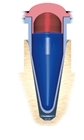
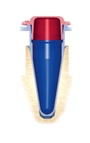
Different thermocycler brands and models have slightly different block well angles.
BIOplastics uses its sister company’s (CYCLERtest) competence and knowledge of (q)PCR cyclers during the (q)PCR vessel design. BIOplastics (q)PCR vessels features a tube angle optimized to fit all main brands and models of (q)PCR thermocyclers thus allowing maximum heat transfer and optimum results.

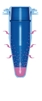
In low profile tubes there is a smaller “air” volume above the reaction mix than in regular and high profile tubes. This allows less reaction mix to go into gas phase, leading to less concentration of the samples, less change in reaction conditions and therefore to more reproducible results. Most fast cyclers accept low profile tubes, strips and plates. Most regular (q)PCR cyclers accept regular profile and high profile products (tubes, strip-tubes and plates)
Clever design and sealing rims around the tube closure points provide a leak-free seal, reducing evaporation and leading to more reproducible results. The superior sealing properties allows running (q)PCR reactions with volumes as low as 5 µl.
The cap design allows minimum pressure for closure and opening which is highly appreciated by users and minimizes RSI risks.
 The caps of EU tubes and strips are designed to enable fluorescent signals to pass through to the optical detection unit of a Real-Time thermal cycler. For the closure of EU strips and plates BIOplastics offers a range of EU wide optical area cap strips along with the “Optiseal” adhesive seals. The EU optical caps strips have maximum optical areas (12.6 mm2) and the thickness of the “optical window” is reduced to 0.30 mm, which minimize light absorption of the plastics. BIOplastics’ designers have positioned the “optical area” indented to the cap surface which prevents “touching” the optical area during the whole (q)PCR process. EU wide optical cap strips can be used on any of the (q)PCR tubes, strips and plates. The robust design prevents any deformation, and applying and removing these cap-strips is easy.
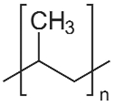
Although polypropylenes are chemically inert, they still exhibit charged groups, static properties and hydrophobic areas. Different types and blends of polypropylene therefore show differences in binding of ions like magnesium, proteins, DNA and other charged groups which may influence your results. BIOplastics offers 3 different blends of polypropylene, these being O-type, A-type and M-type material.
The O-type material is optimal material used in (q)PCR grade reaction vessels. A-type material resembles the classic polypropylene mix, has better chemical resistance properties when compared to O-type and is available for most of the (q)PCR reaction vessels. M-type material is a more robust material which is mainly used for 0.5 ml, 1.5 ml and 2 ml tubes and pipette tips. For (q)PCR applications we recommend O-type material for optimal results, as it is non-binding and shows the highest thermal conductivity. O-type and M-type material blends are specifically selected for non-binding characteristics to DNA, RNA and proteins.
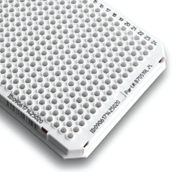
One of BIOplastics’ latest innovations is the incorporation of micro particles in its (q)PCR and related product range. The BPLPM technology (BIOplastics particle mix) products are offered in addition to the regular range of (q)PCR products. While not interfering in the (q)PCR process, these particles, by nature, increase signal to noise ratio’s in Real-Time PCR applications.
BPLPM enables indelible IN PRODUCT labeling and identification. While others use ink, stamps, or dyes containing organic solutions or stickers, BIOplastics’ BPLPM technique results in a non-removable, uniquely marked and coded product. No writing with markers, no mistakes, no removal of marks, no double identification numbers; just use the unique ID# at the beginning of your process.
Link the unique ID to your Lab LIMS system and samples.
BPLPM technology is used in a selected range of products which will be increased in the future. BPLPM technology is particularly useful for accredited labs in Pre-diagnostics and Diagnostic settings to improve procedures and reduce the risks of label failures. Depending on purchase volumes, custom layouts and customized codes are available, and may prove useful for kit manufacturers to effectively trace products and applications.
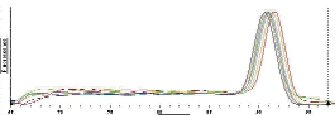
BIOplastics focus provides maximum mould and manufacturing accuracy, while precise product specifications result in superior and reproducible products. BIOplastics’ (q)PCR vessels have an average wall thickness of 0.30 mm and a maximum tolerance of 0.05 mm. These extremely tight tolerances lead to extraordinary uniform and reproducible products.
Consequently, reproducible melting and high resolution melting curves, typically used in the post qPCR process, are generated using BIOplastics extremely uniform products. HRM curves can be normalized, i.e. “cycler fingerprint” adjusted, by using CYCLERtest®‘cycler calibration services and calibration tools. (www.cyclertest.com)
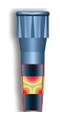
The filter in a filter tip eliminates the formation of aerosols in the shaft of the pipette, since it blocks the air-to-liquid interface between the sample and the pipette shaft.
This simple idea has evolved in numerous types and brands of filtertips and filter materials. Most filters are made of 3-dimensional cross-linked HMPE (Polyethylene), which is totally inert. The pore size should be smaller than 25 microns to generate a “reasonable protection” and not smaller than 14 microns to still allow an accurate airflow required when pipetting. The filtering capacity of a certain filter is defined as the ratio of filter length and pore size. The longer a filter is, the better it filters.
This relation is almost linear. BIOplastics filters are the longest available in the market with a superior 18 micron pore size gradient. By applying a gradient into the filter, BIOplastics’ filter tips have an extended airflow and a balanced optimal aerosol protection by pore size and filter length, still assuring pipetting accuracy.
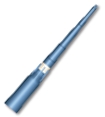
BIOplastics tips have a very fine orifice for complete, reproducible pipetting.
The pipette tips are extremely clear to allow content examination if required. Tips are extremely uniform, flexible and soft to secure a good, leak-free fit around the shaft of the pipette. The soft, ultra-clear medical grade material also reduces RSI injuries since the pressure to attach and release from the pipette is significantly reduced. The fine orifice assures reproducible pipetting. Tips marked with the beveled orifice icon have a special 45° beveled orifice to guide the discharge of the fluids even better.
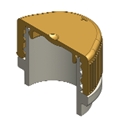
BIOplastics’ smart secure closure technology is resulting in superior screw cap tubes.
The screw caps are designed in a way that the use of “old fashioned” rubber rings has become obsolete. The absence of a rubber ring assures that the closure is not affected when in contact with organic solvents nor that leakage occurs due to hardening and unbalanced shrinkage caused by low and high temperatures and pressure. The smart secure closure design allows frequent opening and closing, even in extreme conditions, without compromising the closure and also avoiding leakage (working range -200 °C +100 °C).
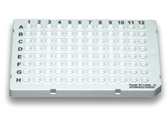
Due to BIOplastics’ BPLPM technology, products can be individually and uniquely coded. These products are available for the qPCR product range as well as for micro centrifuge tubes and screw cap tubes. Each tube can have a unique ID#. Specific codes or customized marked products are available on demand.